paulate specialist Hospital

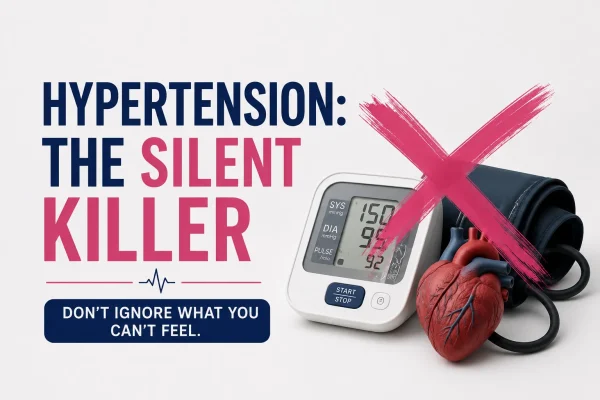
Hypertension: The Silent Killer

Hypertension, commonly known as high blood pressure, is one of those health conditions that can exist quietly for years while gradually affecting the body. A person can look perfectly healthy, feel energetic, go to school or work, exercise, and carry on with everyday life without realizing that their blood pressure is consistently higher than it should be. That quiet nature is one reason hypertension is often described as the “silent killer.” The phrase sounds dramatic, but it reflects an important medical reality: high blood pressure frequently causes no obvious symptoms while increasing the risk of serious cardiovascular and other health problems over time. Blood pressure itself is not something harmful. In fact, the body needs blood pressure to move oxygen and nutrients through the bloodstream. The concern begins when the pressure against artery walls remains too high over time. Persistent hypertension can place additional strain on the heart and blood vessels and contribute to damage involving organs such as the brain, kidneys, and eyes. The longer high blood pressure remains uncontrolled, the greater the opportunity for these effects to accumulate. The encouraging part is that hypertension can often be detected, monitored, and managed. Blood pressure measurement is relatively simple, and healthcare professionals have several approaches for reducing cardiovascular risk. Depending on the individual, management may involve lifestyle changes, medication, or a combination of both. Understanding what hypertension is, why it can be dangerous, and why regular health checks matter can help people take the condition seriously before complications develop. What Is Hypertension? Blood pressure is the force created by your blood as your heart pumps it through your arteries. Your body needs a certain amount of blood pressure to deliver oxygen and nutrients to tissues throughout the body. The problem occurs when that pressure remains too high for too long. When you have your blood pressure measured, you receive two numbers, such as 120/80 mmHg. The first number is called the systolic blood pressure. It represents the pressure in the arteries when the heart contracts and pumps blood. The second number is the diastolic blood pressure, which represents the pressure in the arteries while the heart relaxes between beats. Blood pressure is not a fixed number. It naturally rises and falls during the day. Exercise, stress, anxiety, caffeine, nicotine, pain, illness, sleep, and even talking during a measurement can temporarily change it. That is why healthcare professionals generally do not diagnose chronic hypertension simply because one blood-pressure reading is high. Instead, they look at repeated measurements and consider the person’s overall health. There are different forms of hypertension. Most cases are called primary or essential hypertension, meaning there is no single identifiable cause. It usually develops through a combination of genetics, age, blood-vessel changes, diet, physical activity, environmental factors, and other influences. Some people have secondary hypertension, where another medical condition or medication is contributing to the high blood pressure. Kidney disease, certain hormonal disorders, sleep apnea, and some medications can cause or worsen hypertension. Identifying secondary hypertension is important because treating the underlying problem may improve blood-pressure control. Understanding Your Blood Pressure Numbers Blood-pressure numbers can be confusing because different medical organizations use slightly different definitions. For example, the 2017 American College of Cardiology/American Heart Association (ACC/AHA) guideline classifies adult blood pressure below 120/80 mmHg as normal. It defines 120–129 mmHg systolic with a diastolic pressure below 80 mmHg as elevated, 130–139 mmHg systolic or 80–89 mmHg diastolic as stage 1 hypertension, and 140 mmHg or higher systolic or 90 mmHg or higher diastolic as stage 2 hypertension. The 2024 European Society of Cardiology (ESC) guideline uses a somewhat different system. It continues to define hypertension as office blood pressure of 140/90 mmHg or higher, while describing readings of 120–139 mmHg systolic or 70–89 mmHg diastolic as “elevated blood pressure.” This difference does not mean that one organization thinks blood pressure is harmless while another thinks it is dangerous. Guidelines use different approaches to determine when the benefits of treatment outweigh the potential disadvantages. For patients, the practical message is more important than memorizing every category: repeatedly elevated blood pressure should be discussed with a healthcare professional. Your healthcare provider will interpret the numbers according to the appropriate guideline and your individual risk factors. Why Is Hypertension Called the “Silent Killer”? Imagine a problem inside your home that makes no noise, produces no smell, and gives you no obvious warning. You might never think to look for it. Hypertension can behave in a similar way. Many people with high blood pressure feel completely normal. They may exercise, work, study, socialize, and sleep normally. They may have no headache, no dizziness, and no chest pain. This creates one of the biggest challenges in hypertension care: feeling healthy does not prove that your blood pressure is healthy. Some people associate high blood pressure with headaches, dizziness, nosebleeds, or feeling stressed. These symptoms can occur for many different reasons and are not reliable ways to diagnose ordinary hypertension. The only practical way to know whether your blood pressure is elevated is to measure it correctly. This is why routine blood-pressure screening is so valuable. A simple measurement can identify a potential problem that would otherwise remain invisible. How Can High Blood Pressure Damage the Body? Your arteries are flexible blood vessels designed to carry blood throughout the body. When blood pressure remains elevated, the blood vessels are exposed to increased mechanical stress. Over time, this can contribute to changes in the artery walls, loss of elasticity, and damage to the delicate lining of the blood vessels. The effects are not limited to the arteries themselves. High blood pressure can place additional workload on the heart and affect organs that depend on healthy blood circulation. The major organs of concern include: This damage usually develops gradually rather than appearing overnight. That is precisely why controlling blood pressure early matters. How Common Is High Blood Pressure? Hypertension is a global health problem. The WHO estimates that approximately 1.28 billion adults between 30 and…
Read Full News

The Importance of Early Medical Diagnosis Instead of Self Medication

When people become ill, one of the first questions they often ask is, “What medicine should I take?” From a healthcare perspective, there is another question that should usually come first: “What is causing these symptoms?” That distinction is at the heart of safe medical care. Self-medication can appear convenient. A person may have experienced similar symptoms before, have medicine left at home, receive a recommendation from a relative or friend, or find a treatment suggestion through an online search. When symptoms seem mild, visiting a healthcare professional can feel unnecessary. Yet symptoms are not diagnoses, and a medicine that was appropriate for one illness, one person, or one point in time may be inappropriate in another situation. This does not mean that every minor symptom requires a doctor’s appointment or that all over-the-counter medicines are unsafe. Responsible self-care has an established place in healthcare. Many nonprescription medicines are specifically intended to help people manage uncomplicated, short-term conditions when they are used according to their labeling and appropriate professional advice. The concern arises when a person moves from self-care into self-diagnosis and unsupervised treatment. The distinction matters because medicines have biological effects. They can interact with other medicines, produce adverse effects, be inappropriate for particular medical conditions, or temporarily reduce symptoms while the underlying illness continues. Some medicines require careful dosing, monitoring, or a confirmed diagnosis. Antibiotics, for example, are designed to treat certain bacterial infections and should not simply be taken whenever someone develops a cough, fever, or sore throat. Early medical diagnosis provides a safer starting point. A healthcare professional can assess the symptoms, consider the person’s medical history, perform an examination when necessary, determine whether testing is appropriate, and decide whether treatment is actually needed. Sometimes the result is a prescription; sometimes it is supportive care, monitoring, or reassurance. The value of professional assessment is not that it always produces more treatment. It is that it produces better-informed treatment decisions. What Self-Medication Really Means Self-medication generally refers to using medicines to manage a health problem without appropriate professional assessment or guidance. It can include taking a medicine that was prescribed to someone else, reusing an old prescription for a new illness, taking more than the recommended amount, combining several products without checking their ingredients, or choosing a medicine based on an assumed diagnosis. There is an important difference between this and appropriate use of an over-the-counter medicine. If an otherwise healthy person follows the label instructions for a suitable product intended for a minor condition, that may be considered responsible self-care. Problems arise when a person assumes that a medicine is appropriate simply because it is available without a prescription or because it worked for somebody else. The word “self-medication” can also hide how complicated medication decisions actually are. Choosing a medicine involves more than matching a symptom with a product. A healthcare professional may need to consider age, allergies, pregnancy status where relevant, existing medical conditions, other medicines, kidney and liver function, the duration of symptoms, and the possibility of an alternative diagnosis. For example, two people may both have stomach pain but have entirely different underlying causes. Two people may both have a cough while having different types of respiratory illness. Treating the symptom without considering its cause can therefore lead to inappropriate treatment. From a clinical perspective, the problem is not that patients want relief. Wanting relief is completely understandable. The problem is making a treatment decision before establishing whether the treatment fits the person and the condition. Why People Self-Medicate Self-medication usually has understandable reasons behind it. People may want quick relief, may have limited access to healthcare, or may believe that a problem is too minor to justify an appointment. Previous experience can also create confidence: if a particular medicine helped last time, it seems logical to use it again. Family and social networks influence medication decisions as well. Someone may recommend a medicine because it worked for them, while social media can make individual experiences appear like universal medical advice. Cost and convenience can also influence decisions. A medicine already sitting in a household cupboard may seem easier to use than arranging a consultation. There is another factor: symptoms create uncertainty, and people naturally want to remove that uncertainty quickly. Searching for an answer and taking a medicine can feel more reassuring than waiting for professional assessment. However, speed is not always the same as safety. In healthcare, the fastest action is not necessarily the best action. Sometimes the appropriate response is simple self-care. Sometimes it is speaking with a pharmacist. Sometimes a routine appointment is needed, and sometimes symptoms require urgent evaluation. The challenge is knowing which situation applies. That is precisely why clinical assessment remains important. Why Diagnosis Should Come Before Treatment Diagnosis is the process of determining the most likely explanation for a person’s symptoms and clinical findings. It does not necessarily require an elaborate test or hospital visit. In many everyday medical situations, diagnosis begins with a conversation and a focused examination. A healthcare professional asks questions such as when the symptoms started, how they have changed, what makes them better or worse, whether other symptoms are present, and whether the person has relevant medical conditions or takes regular medication. The clinician then considers the available evidence and determines whether additional testing is needed. This approach is fundamentally different from selecting a medicine based on a symptom alone. A useful way to think about diagnosis is to imagine a warning light on a vehicle. The warning light tells you that something may need attention, but it does not necessarily tell you which component has failed. You could replace a random part and hope the problem disappears, but a mechanic would normally investigate first. Symptoms work in much the same way: they provide clues, not complete explanations. Symptoms Are Clues, Not Diagnoses A symptom is a piece of information. It is not automatically the name of a disease. Headache, for example, can occur with many different conditions…

Read Full News